Rome for the Renaissance: most of what tourists call it is Baroque
9 min read
If you book a Rome trip around the Renaissance and follow the obvious recommendations, you will spend most of it looking at the Baroque. This is not a trick played on you by anybody. It is the calendar.
Rome’s High Renaissance includes Julius II, Raphael, Michelangelo and Bramante: the Sistine ceiling, the Raphael Rooms and the villas of papal bankers. The sack of 1527 did not end building in Rome for a century. Renaissance projects continued through the sixteenth century; Bernini and Borromini belong to the later Baroque. Basilica di San Pietro.
So the useful question is not “which museum has the best art”. It is: which rooms still contain the 1500s, and what do they cost.
The shortlist, by what is actually in the room
The Raphael Rooms and the Sistine ceiling — inside the Vatican Museums, included in the regular museum ticket when open. Plan your route to include both; do not assume every visitor route automatically passes through the Stanze.
Villa Farnesina — Raphael’s Galatea, the Loggia of Cupid and Psyche, and Peruzzi’s Hall of Perspectives. A banker’s suburban villa begun in 1506, frescoed by Raphael, Peruzzi, Sebastiano del Piombo and Il Sodoma, on the Trastevere bank.
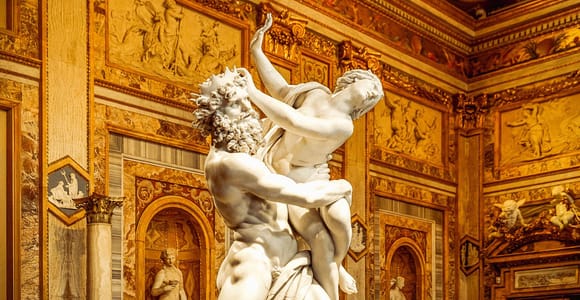
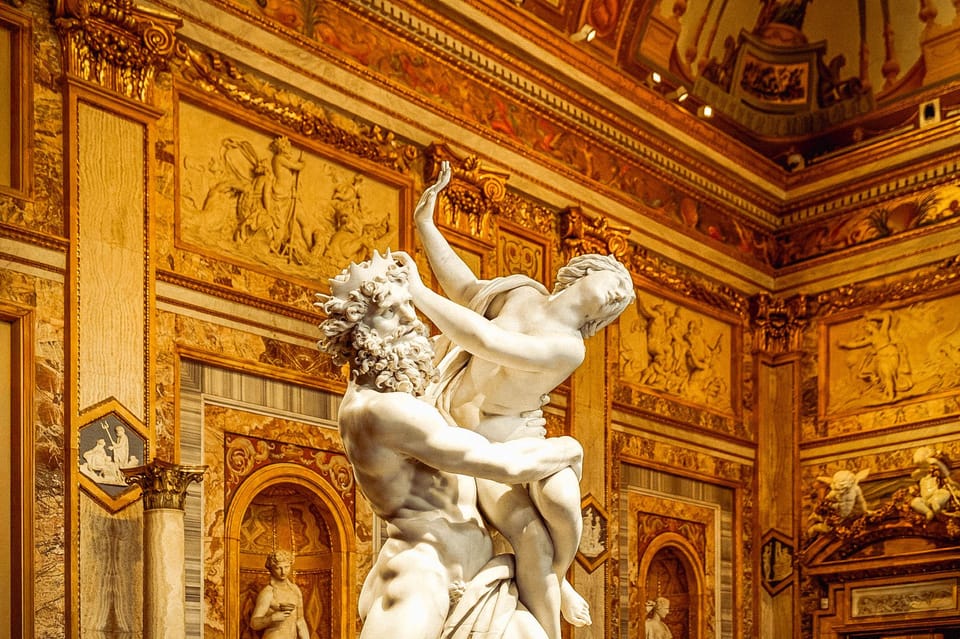
Galleria Borghese — Raphael’s Deposition and works by Titian alongside Baroque art. Check the current displays and loans before planning around a particular painting.
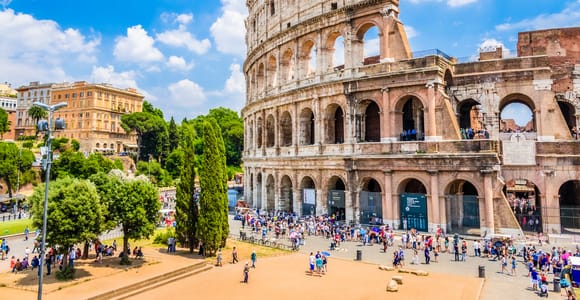
San Pietro in Vincoli — Michelangelo’s Mosè, carved for the tomb of Julius II and stranded in a parish church a short walk uphill from the Colosseum.
Santa Maria del Popolo — Raphael designed the Chigi Chapel; the Cerasi Chapel holds two Caravaggios. One church, both centuries, which makes it the single clearest lesson in the difference.
What each one costs and when it opens
Villa Farnesina
From the villa’s own visitor page, hours in force from 16 February 2026: Villa Farnesina.
Monday to Saturday, 9 a.m.–2 p.m.; last admission 1.15 p.m.
Second Sunday of each month: 9 a.m.–5 p.m.; last admission 4.15 p.m.
The official tariffs list €12 full price, €10 for over-65s and eligible partner categories, €7 for students aged 10–18. The free-child category says “up to 10”, overlapping the reduced category at age 10; confirm that boundary with the villa. Licensed guides, accredited journalists and disabled visitors with a companion also qualify for free entry. The page labels these rates as valid from 13 November 2026 to 14 February 2027; check the date-specific ticket for other dates or exhibitions.
On ordinary opening days, arrive before 1.15 p.m. The second Sunday offers an afternoon visit and a MuSa Sapienza concert at 11.30 a.m.; the concert requires a reservation.
The visit covers the Loggia of Cupid and Psyche, the Hall of the Frieze, the Loggia of Galatea, the Hall of Perspectives, the Wedding Hall, the Pompeian Room and the Grotesque Gallery.
The Vatican Museums
Official hours: Monday–Saturday 8 a.m.–8 p.m., last entry 6 p.m. Rooms begin clearing 30 minutes before closing. The last Sunday is normally free, 9 a.m.–2 p.m., last entry 12.30 p.m., subject to the holiday exceptions and special closures in the official calendar.
The free Sunday has shorter hours. We go into the ticket variants in detail in Vatican Museums: entry ticket or guided tour? and into what a ticket does and does not cover in what the Vatican ticket includes.
For a Renaissance visit, check that the itinerary allows time for the Raphael Rooms. An early slot does not guarantee empty rooms, and a longer art-focused tour can be useful if its actual route matches your interests.
Galleria Borghese
Official admission is €16 plus a compulsory €2 booking fee; exhibitions may add a surcharge. Visits normally last two hours, but the 5.45 p.m. slot is shorter. Open Tuesday–Sunday, 9 a.m.–7 p.m.; closed Mondays, 25 December and 1 January. Galleria Borghese. The Crown Tours guided visit costs €49 per person and lasts two hours. It is offered in English, French, German, Japanese and Russian, not Italian, Spanish or Portuguese. Wheelchair users are excluded. Its art itinerary also includes Baroque works; it is not exclusively a Renaissance tour.
The churches
Michelangelo’s Moses and Raphael’s Chigi Chapel are in active churches. Check each church’s current visitor arrangements and services before travelling. Santa Maria del Popolo.
A church visit can focus on one work, but worship, visitor rules and restricted chapels may limit access. Do not assume there will be no queue, booking requirement or time limit.
A two-day Renaissance plan that survives the opening hours
Day one, morning: Vatican Museums with a reserved slot. Plan the Raphael Rooms and Sistine Chapel; add the Pinacoteca as a separate part of the route if time permits. Tuesday/Wednesday through Friday/Saturday are workable two-day pairs, subject to holiday closures.
Day one, afternoon: St Peter’s. Michelangelo designed the dome and carved the Pietà just inside the door on the right — see the dome climb for whether to go up.
Day two, morning: Villa Farnesina, then across the river on foot.
Day two, afternoon: Galleria Borghese with a reserved slot; follow the current visitor route.
That leaves the churches as fillers rather than fixtures, which is the only sane way to schedule them.
Where this goes wrong
Booking a “Renaissance tour” and getting a Baroque one. Read the itinerary for names, not adjectives. If the stops are Piazza Navona, the Trevi Fountain and the Spanish Steps, you have booked the seventeenth and eighteenth centuries. That may be a lovely afternoon — see our walking tours — but it is not what you asked for.
Treating the Sistine Chapel as a standalone stop. Allow time for the museum route and check the current map. Our planning article: a one-way street.
Assuming an art-historical label means an entrance. Bramante’s Tempietto at San Pietro in Montorio, one of the most important small buildings of the period, sits in a courtyard with its own access arrangements. Several key Renaissance interiors in Rome are inside institutions, seminaries or academies with restricted access. Where we have not been able to verify current access, we say so rather than sending you across the city on a guess. We have not verified current access to the Tempietto courtyard.
Everything mentioned here sits in our Rome selection. For the art-led route through the Vatican in particular, see the Vatican for art lovers; for fitting a museum-heavy trip into the days you have, which Rome tour to book.