Which Rome tour to book: matching 694 listings to the days you actually have
7 min read
Rome has 694 bookable tours and tickets in our selection. The Colosseum is not an alternative to the Vatican; a cooking class is not an alternative to a day trip. The real question is not which tour is best but which ones fit into the number of mornings you have — and that question has a different answer for two nights than for five.
What follows is the arithmetic, not a wish list.
The standard Colosseum ticket, and what it covers
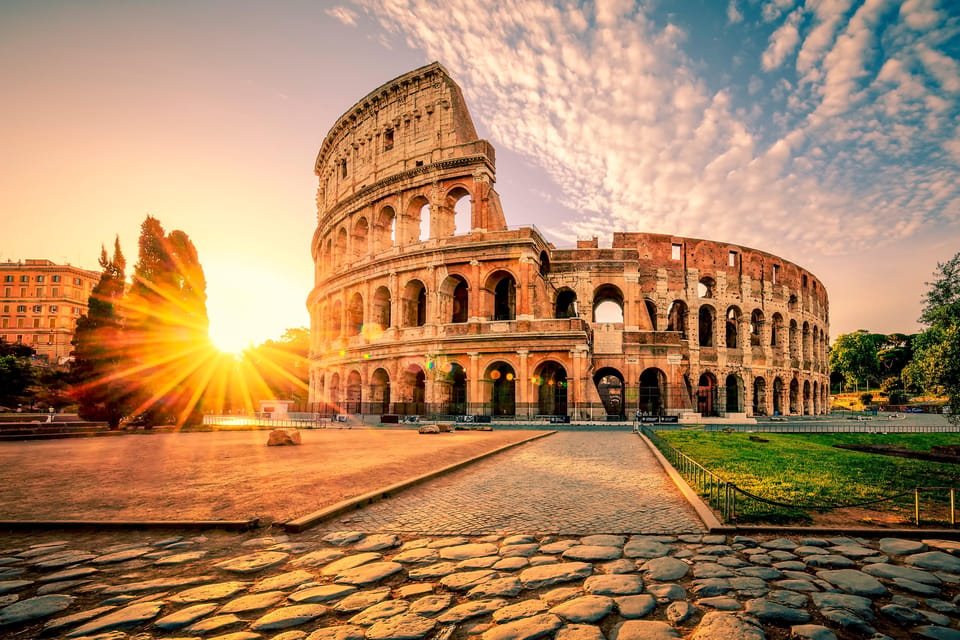
The official full-price Colosseum ticket costs €18 and also covers the Roman Forum–Palatine archaeological area, which you can enter within 24 hours before or after your booked Colosseum time. That is one entry to the Colosseum at the booked time and one entry to the combined Roman Forum–Palatine area, not a day pass you can wander in and out of. A two-and-a-half-hour guided tour with Forum and Palatine starts at €55.18 per person and includes entry to all three sites with an English-speaking guide.
Two things about the standard state ticket surprise people at the gate. It is issued in a name, and an identity document is checked against it — so it needs to be booked under the name of the person who will stand there. And the arena floor is not in it. On the linked guided tour, arena access is included only if you choose the Arena Access option; that option excludes the Colosseum’s first and second levels. The standard state ticket also excludes the underground level.
If the Colosseum is the reason you are coming, the full range of tickets and tours is worth ten minutes of comparison: check the access areas, duration, guiding language and group size for each option. The linked guided tour allows up to 15 people in a standard group or up to 12 in the private option. For the linked guided tour, meet at Via in Miranda at least 20 minutes before departure and bring a valid original passport or ID card matching the ticket name. The tour is not suitable for people with mobility impairments or wheelchair users.
The Vatican is a different kind of morning
Distinguish three places when booking: the Vatican Museums, the Sistine Chapel inside them, and St Peter’s Basilica, which has separate access arrangements. The Sistine Chapel sits inside them — it cannot be booked alone, whatever a listing suggests. The Basilica costs nothing to enter. The Basilica’s official paid booking service covers a reserved time slot and a digital audio guide; ordinary entry remains free.
Budget a morning, not two hours. The Museums route is long, the Basilica has its own security queue on the square, and the dome climb requires a separate ticket: 551 steps if you walk all the way, or 320 after taking the lift. When comparing the Vatican listings, check which places and services each option includes, whether it has a live guide, and the guiding language and group size.
One planning fact that catches people out: the Museums are closed on Sundays, apart from the last Sunday of the month, when entry is free — unless that date coincides with Easter Sunday, 29 June, 25 or 26 December, or 31 December. Check the official calendar for other holiday and extraordinary closures.
One day, two days, four days
One day. Pick one of the two giants, not both. The Colosseum in the morning and the centre on foot in the afternoon is a real day; the Colosseum plus the Vatican is a march. Allow for the park’s seasonal hours: from 25 October 2026 to 28 February 2027 it closes at 4:30 pm, with last admission at 3:30 pm; it is closed on 25 December 2026 and 1 January 2027.
The Pantheon is a useful additional stop. Official full-price admission is €7 per person. Compare that with the entry-and-app package at €7 per person; its voucher must be exchanged at Salita de’ Crescenzi 35 ten minutes before the booked time. Bring a charged smartphone, your own headphones and internet access to download and activate the audio guide before entering; it works offline afterwards. Each participant needs valid ID. Cover your shoulders and knees, and allow for temporary entry restrictions during religious services or venue operations.
Two days. One giant each morning, and the afternoons for whatever you are actually interested in — Trastevere and the Ghetto on foot, the Borghese Gallery, Castel Sant’Angelo and the rest of the city, or the catacombs out on the Via Appia, which take longer than people expect because they are several kilometres from the centre. Check the opening calendar for the particular catacombs you choose. San Callisto, for example, closes on Wednesdays, Christmas Day and New Year’s Day, as well as from 13 January to 10 February 2027 and on Easter Sunday, 28 March 2027.
Four days or more. Now a day trip makes sense, and not before. For a Pompeii or Amalfi Coast day trip, check the total duration, time spent travelling and return time before giving up one of a short stay’s days. For Tivoli, check which villas the itinerary includes and when it returns to Rome. And an evening is free for a food tour or a cooking class, with one caveat: check whether the class includes a full meal before treating it as dinner. If a full meal is included, a restaurant booking afterwards may be unnecessary.
What to book ahead
Start by checking availability for the places that anchor your itinerary.
The Borghese Gallery requires reservations and limits admissions; standard visits last two hours, while the 5:45 pm slot lasts one hour and 15 minutes. Book ahead if it matters to your trip: limited last-minute tickets may be available at the ticket office, but same-day entry is not guaranteed.
Check Colosseum availability early too: official ticket sales open 30 days before the visit. For visits from 9 May 2026, the park permits only one name change, requested by midnight Rome time on the seventh day before the visit, and only for an obvious name-entry error, an incorrect ticket-type assignment within the same transaction, or serious documented reasons preventing the visit. Booking for the right person matters more than booking early.
For everything else, check availability and the cancellation terms before building the day around a booking.
What not to book
“Skip the line”, read as “no waiting”. Pre-booking can spare you a ticket purchase on arrival, but it does not guarantee priority entry: the Pantheon admits visitors in arrival order. It does not move you past security, and at St Peter’s that is the queue people are actually standing in. An operator promising no wait at all is promising something they do not control.
A hire car for the city. The historic centre has restricted traffic zones with different boundaries and operating hours; check the rules and any permit requirements for your route before driving in. A car earns its keep for the Castelli Romani, Tivoli or the coast — picked up on the day you leave, not on the day you arrive.
A hop-on hop-off bus. Read the actual route, stops and validity before choosing it for the day; allow time for traffic.
Fewer bookings than you think
Rome rewards restraint in a way that few cities do. Two big tickets, one thing you genuinely care about and one evening that involves eating will fill three days without anyone running. The 694 listings are a menu, not a to-do list, and most of them are for somebody else’s trip.